 LIABLoud: Completely Wireless Speakers!

LIABLoud:
Welcome here, velkommen herinde! (tryk her for at få hjemmesiden på Dansk)On this website you will find a description of the "LIABLoud" project. Our goal is to develop "completely wireless speakers", i.e. speakers where there is no need for wires for the transmission of audio signals or power. We achieve the first by using suitable radio modules, e.g. Bluetooth, the latter by having a number of rechargeable Li-ion cells in the speaker. We want to be able to play sound in stereo, so we need something like TWS: "True Wireless Stereo", a protocol for Bluetooth where you can connect two speakers to a single source, e.g. a smartphone.
As of may 2026 we have a fully functional printed circuit board with batteries, charging electronics, Bluetooth module, DSP for tone control and crossover functions and a stereo class D amplifier (2*45 Watt). All transfers from the Bluetooth module to the DSP to the amplifier is done digitally with I2S. This means that the amplifier is VERY SILENT when the music is paused... This can be difficult to achieve if the signal chain is purely analog. We have also built cabinets, both a pair that can stand in a bookshelf (the Bookshelf speaker) and a pair that stands on the floor (the Tower speaker), see figure 1.2.
Onward we would like to manufacture and sell the LIABLoud speakers, either as complete systems or as kits. We can also just sell the amplifier, which people can use to revitalize their old speakers (see the example in 3.1"). However, all this costs money and where will it come from? See more in the section "Onward...".
In the long run we could well imagine working with other types of wireless transmission of audio signals, e.g. via regular WiFi. We imagine using a Raspberry Pi CM4 for this and the protocols must be open, whether they are developed by ourselves or others. Communication with lossless compression and higher sample rates (96 KHz) is a goal, just as we would like to create a complete karaoke system with effects (reverb, compression, ...) on the song. Now that we have a RPI CM4, it can also generate a video with the lyrics :-)
Why LIABLoud???
In the 1980s and 1990s, many men spent a lot of money and free time buying, building and talking about HiFi sound systems aka stereo systems. People with money went down and bought NAD, Marantz, Sansui, B&O, etc. Others, e.g. engineering students, built speakers or amplifiers. The home-built speakers in particular were not very pretty, but they were big and impressive and they could play loud! They were "Low WAF" systems, where WAF stands for "Wife Acceptance Factor". Women wanted these stereo systems, especially the speakers, OUT of the living room, preferably together with all the stupid cables that most likely were lying on the floor. Oddly enough, men had a hard time seeing the problem...
Fast forward to the present day (2020s) and pretty much all stereo systems have disappeared. Stereo has become mono and for convenience, young and old, men and women alike listen to music on their computers or smartphones. If you want something advanced, people use a speaker from Sonos.
LIABLoud has set out to do something about that! We want the good-sounding speakers back, preferably as kits, but with a focus on convenience and (higher) WAF. The speakers must be easy to move around, so they should be completely wireless and they should have a carrying handle on top. That's the basic concept! See more in the discussion in the next section.
You may enjoy the sight of our first two sets of completely wireless speakers: Bookshelf and Tower, see figures 1.1 and 1.2.
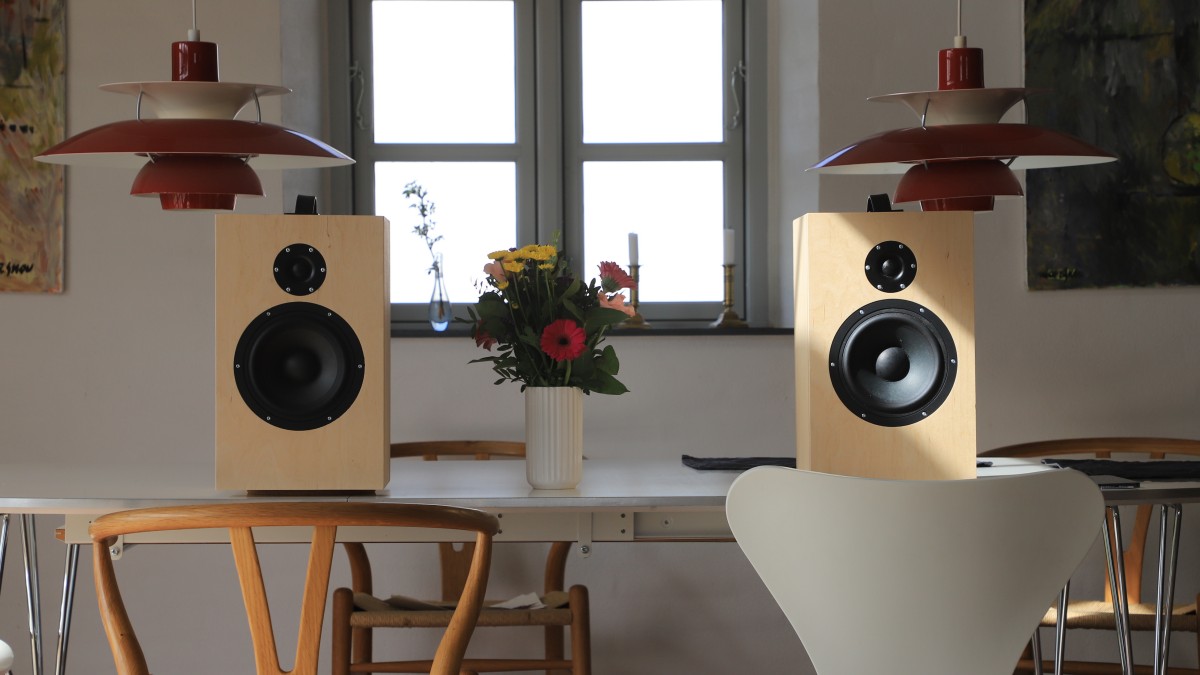
Figure 1.1: The LIABLoud Bookshelf speaker with (expensive) CSS drivers. Two-way system in bass reflex cabinet. Note the handle on top.
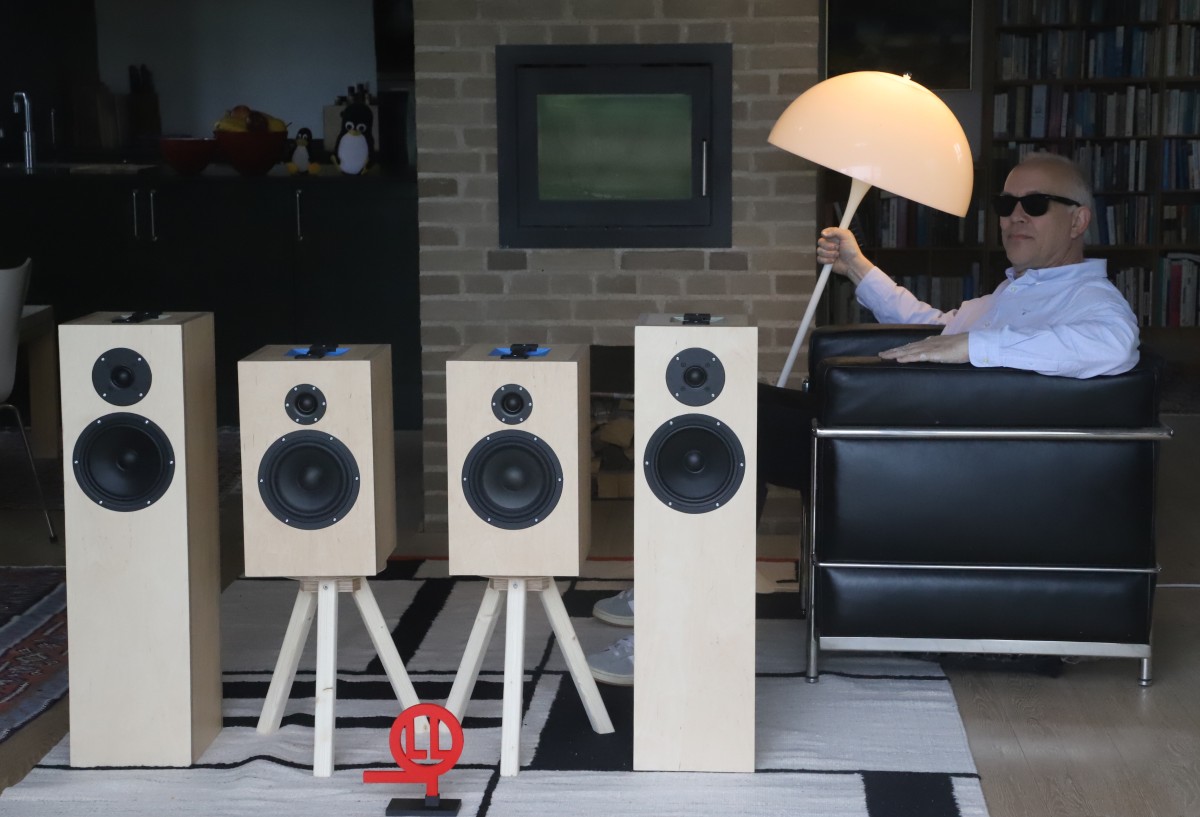
Figure 1.2: LIABLoud Tower and Bookshelf speakers. The Tower uses Scanspeak drivers. All speakers have a carrying handle on the top for easy movement.
2. The Concept:
LIABLoud is working to get speakers back into the living rooms for people who want good sound but don't want having them permanently installed, connected with cables to an amplifier or to mains power. The concept for the LIABLoud speakers is therefore:
- The speakers themselves must contain all necessary electronics. The only acceptable gadgets besides the speakers are wall plug-in power supplies for charging.
- The speakers must be portable. They must be able to be moved around in the house by simply lifting them up and moving them around. However, they do not need to be as robust as flight cases.
- The speakers should be completely wireless. You don't want to mess with cables every time you want to move them.
- The speakers must be able to play in stereo. The sound image gets a completely different depth with stereo compared to mono, and the two speakers must be separable so that you can get a reasonable distance between them.
- The speakers should be "beautiful". Taste and comfort vary, but a pair of slim speakers in varnished wood or painted in a neutral color could be a good idea. In principle, a pair of black Soundboks speakers could complete our concept, but they will not appeal to many people over 30, and certainly not to women.
- The electronics of the speakers must be accessible. Geeks who want to tinker should be given the opportunity to do so, e.g. if they want to adjust the digital crossovers.
- The speakers should also be available as a kit. It should be fairly easy for people without much expertise in woodworking to assemble a set of our speakers, a bit like assembling an IKEA cabinet. This is further discussed in the section cabinettes.
If you want to meet the above concept, you have to work on two fronts: Building the wireless audio electronics and constructing cabinets. In between, the need arises to choose driver units for the speakers. So far, we have chosen to use relatively expensive drivers from established brands (CSS and Scanspeak), and we have also chosen to make the cabinets in birch plywood. This gives good sound and a nice finish that will hopefully appeal to many over 30, women and men, see the close-up in figure 2.1.
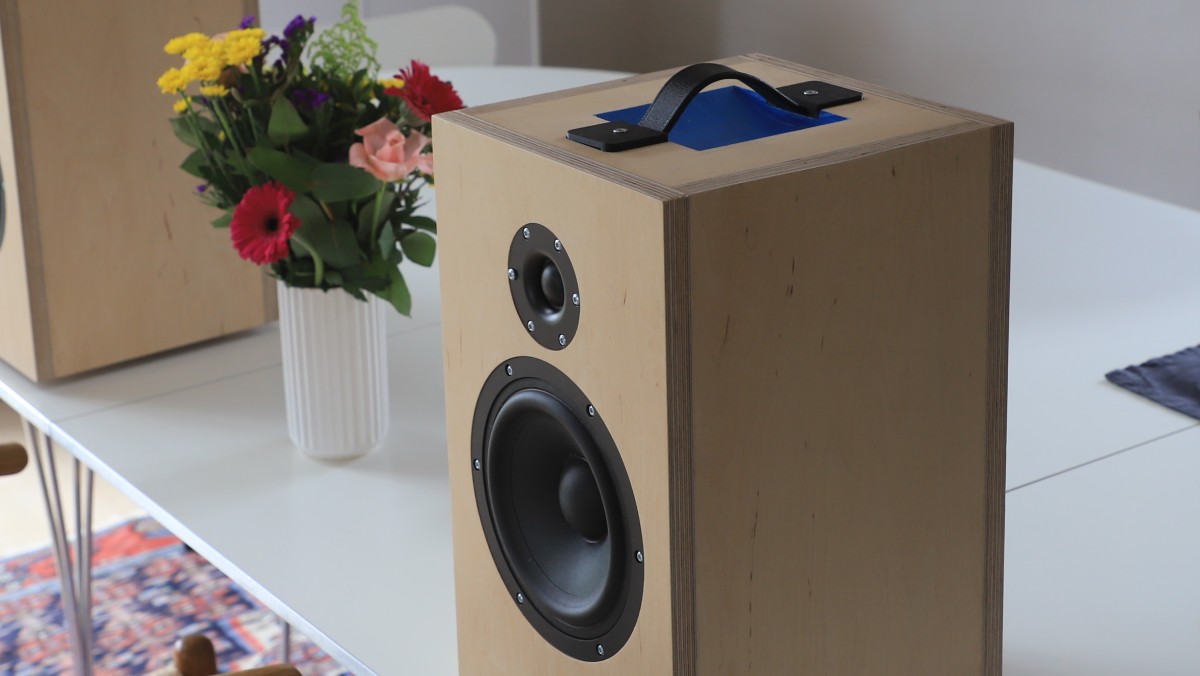
Figure 2.1: The LIABLoud Bookshelf. The cabinet is made of birch plywood.
LIABLoud is not alone in developing wireless audio electronics. Others choose to only develop electronics and then leave it up to the user to get a pair of new or old speakers, see for example "The Vamp+", which can drive two speakers in stereo:
The wireless amplifier The VAMP+.
There is also a Danish kickstarter project whose goal is to revitalize old speakers:
The kickstarter project SoundUp.
We have so far gained the following experiences with our two speakers, Bookshelf and Tower:
- Our speakers fulfill the concept of being portable and completely wireless. Bookshelf weighs 7.5 kg and Tower 10.5 kg per speaker. An adult can easily move two Bookshelf by lifting one in each hand. The concept is broken if each speaker weighs more than 12 kg.
- The speakers can play for about 20 hours on a charge at moderate volume. If you're having a party, they might only play for 8 hours. If you stop the music, the amplifier goes into standby mode and uses less power. After 2 hours without music, the speakers turn off. In this mode, they can live for about two years, ready to play with a single press of the white button on the back of the speaker.
3. The Amplifier:
Nerd Alert: The following is a bit technical :-)
Part of the work in the LIABLoud project has been to develop an amplifier with a Bluetooth module. The digital stereo audio signal is sent wirelessly from a computer or smartphone to the amplifier where it is then transferred to a digital signal processor, DSP. We use the ADAU1401 from Analog Devices.
Our speakers: Bookshelf and Tower each contain two speaker drivers, a bass-midrange (the large one) and a tweeter (the small one). We therefore need the audio signal to be split, amplified and sent to each of these two drivers. We are talking about a crossover and this is where the signal processor comes in: with the free tool "Sigma Studio" you can program the DSP to digitally split the incoming audio signal into two: one contains all frequencies below 2000 Hz, the other all frequencies above 2000 Hz. The signals are still purely digital.
The split signal is fed to a class D output amplifier which is then connected to each of the two drivers in the speaker. Each channel in the amplifier can deliver 45 Watts, enough to play up to a monkey party at the family house!
Our system is said to contain an active crossover. In contrast to this are systems with passive crossovers. In these, the division is done with coils, capacitors and resistors directly on the powerful signal from the output amplifier. Passive crossovers are found in normal, "old-fashioned" speakers. The components in a passive crossover can easily be both large and expensive, plus the energy loss can be significant, up to 30%. We do not have these problems, as the division is done digitally and before the power amplifier.
With the above, we have a complete Bluetooth sound system. We now need the batteries: In the LIABLoud amplifier, we use six 18650 Li-ion cells that provide 24 Volts to the output amplifier. To control both the battery and the sound system, we use a so-called microcontroller, i.e. a small computer. We have chosen the STM32F072 and it also manages the charging of the six 18650 cells (BMS: Battery Management System). We therefore call the microcontroller the "Housekeeping computer".
Figure 3.1 shows the front and back of our current amplifier. Connection to the drivers in the speakers is through the green connector at the top of the picture. The printed circuit board is 160*90 mm and weighs 400 grams with batteries. Figure 3.2 shows pictures of the back of the Bookshelf: the drawer at the bottom contains the amplifier. In the picture on the right, the amplifier is pulled out. The round tube at the top is the bass reflex port.
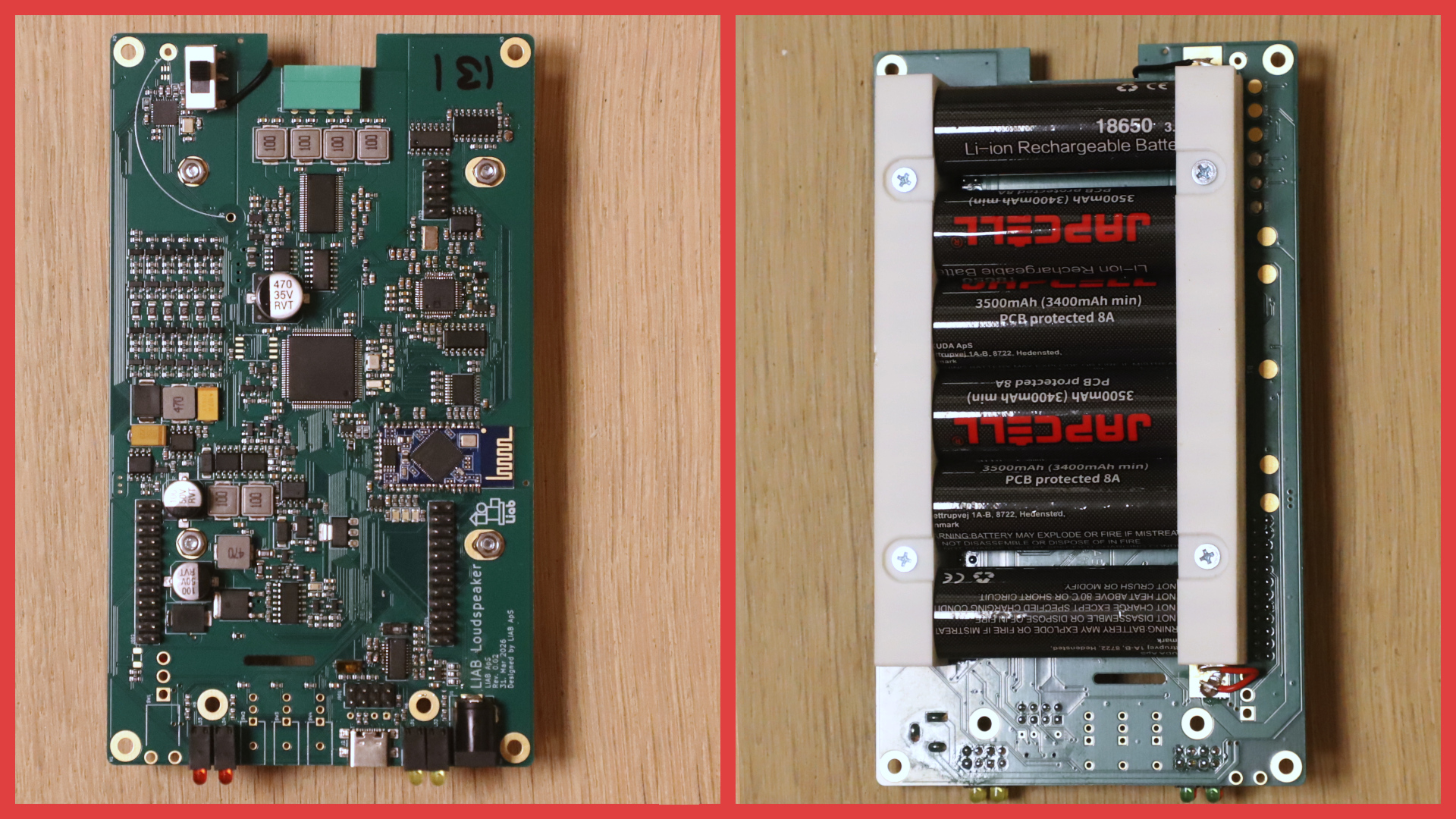
Figure 3.1: The LIABLoud amplifier, front and back. The system contains Bluetooth module, DSP, output amplifier and battery charging system and batteries. The system is controlled by the housekeeping computer.
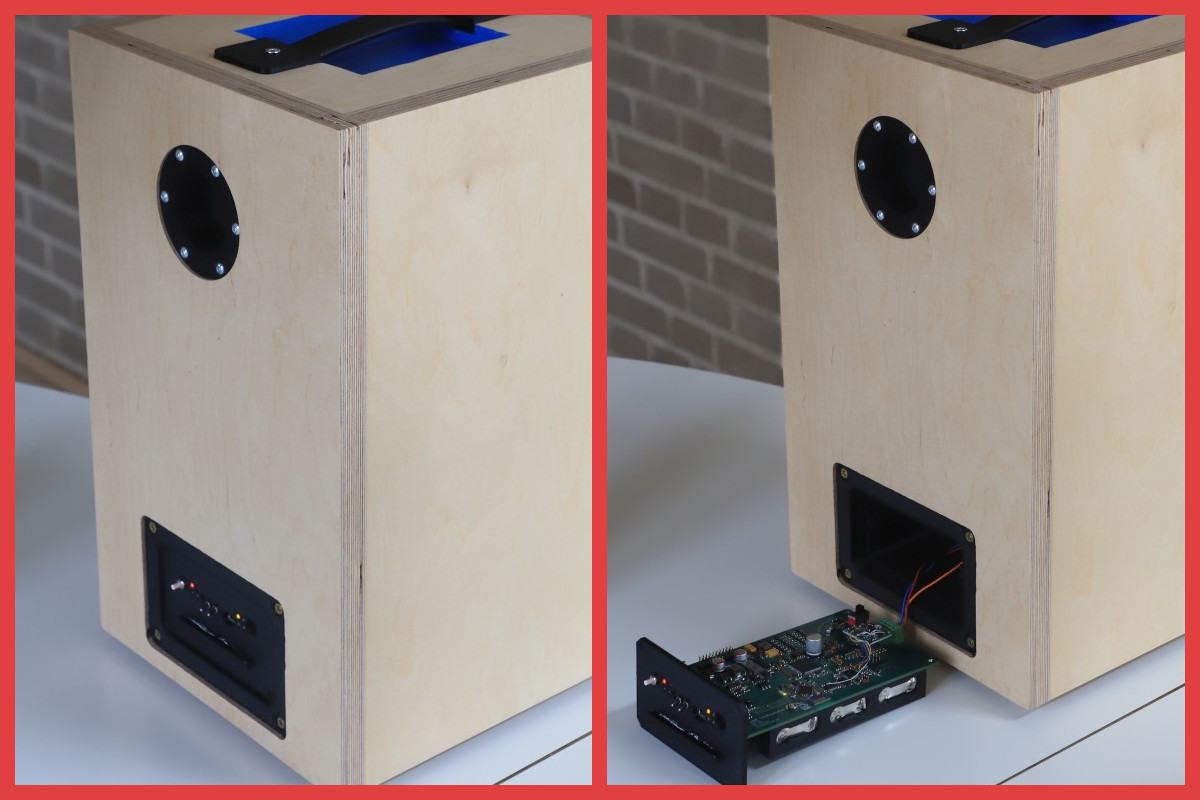
Figure 3.2: The back of the Bookshelf: at the bottom is the drawer with the amplifier. In the picture on the right, the amplifier is pulled out.
There are many advantages to keeping the signal path purely digital as we do in the LIABLoud amplifier:
- We can easily change the behavior of the amplifier, just by reprogramming the DSP and the Housekeep computer.
- As mentioned in the introduction, our amplifier is COMPLETELY SILENT when the music is paused... This can be difficult to achieve if the signal chain is purely analog. You can hear a pure tone with a power of 50 nanowatts in a normal speaker... That's -90 dB compared to 50 Watts!
- The selected digital class D output amplifier has an efficiency of 85%. Even if we play loudly, the amplifier does not get seriously hot, even when mounted in the input drawer.
Instead of programming our DSP with a crossover, we can simply let the digital I2S signal from the Bluetooth module pass through, on to each channel in the output amplifier. This way we have a stereo system that can drive two speakers, just like The VAMP and SoundUp. Figure 3.3 shows our "cigar box" system, where a LIABLoud amplifier drives two regular speakers (a pair of Scandyna MNP).
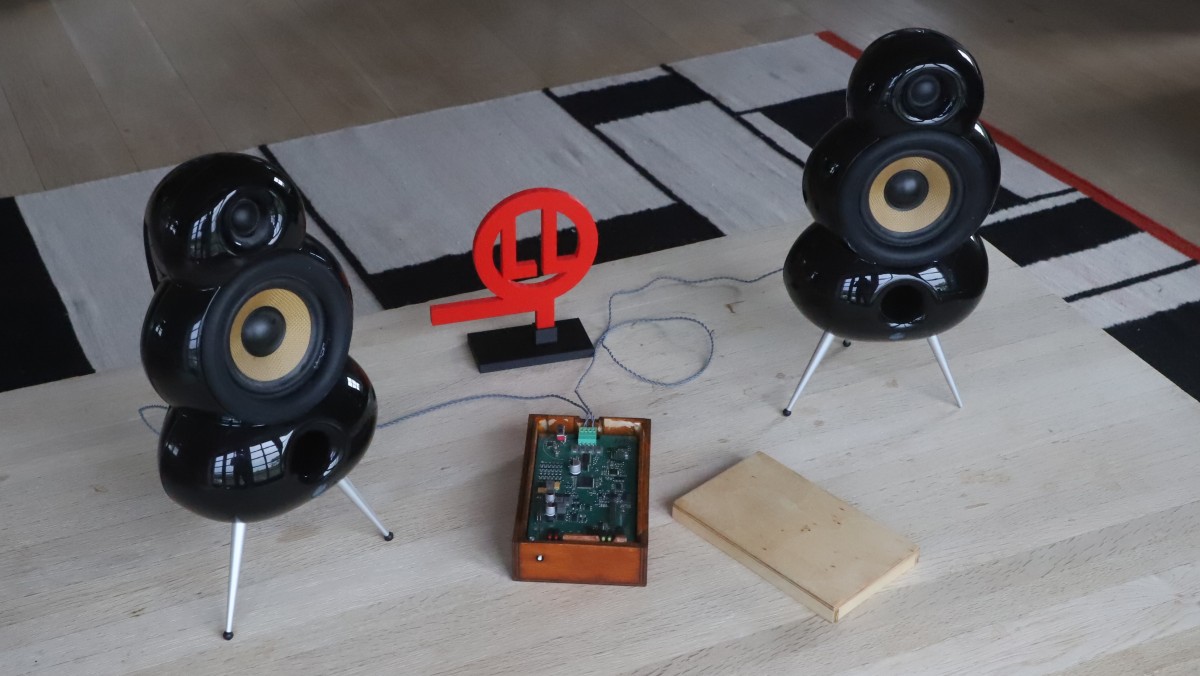
Figure 3.3: LIABLoud's cigar box: A LIABLoud amplifier where the DSP processor is programmed to drive two regular speakers in stereo. This is completely parallel to The VAMP+.
4. Cabinets:
The goal of the LIABLoud project has always been to make complete speakers, either as finished units or as DIY kits. A task included is choosing speaker drivers and designing the cabinets.
If we want to market ready-made speakers, we need to find a company that can manufacture the cabinets industrially and find out who will do the final assembly. Alternatively, we can sell our speakers as kits. This means less work for LIABLoud and a big saving for our customers. The following applies in all cases, but especially if we choose to sell kits.
To get solid, rigid cabinets, we have chosen to use 19 mm birch plywood. One might object: "Why not use MDF (Medium Density Fibreboard), it's cheap and apparently gives even better cabinets with respect to the sound (vibrations, tightness, ...)?" Yes, maybe if the cabinets are manufactured industrially, but in our opinion MDF is not suitable for DIY kits.
MDF has two problems that a DIY person will face if they want to make a nice, neat pair of High-WAF speakers: MDF itself has about the same color as something that comes out of your butt and the smooth surface is easily damaged if they are sanded. Speakers made of MDF *must* be painted or veneered, otherwise they are again a Low-WAF products. Here a new problem arises: painting MDF with a brush and roller can very easily make the cabinets look clumsy and amateurish. Spray paint is a solution, but few people have a spray paint system at hand. Plywood can be sanded and machined without any problems and it is relatively easy to get a high finish. Give the cabinets a coat of floor varnish and you will have a nice pair of speakers, at least in our opinion.
Various companies manufacture speaker kits, but in our opinion they leave the buyer a little in the lurch. Figure 4.1 shows the pieces of a typical commercial kit. The boards are made of MDF and of course cut to the exact dimensions.
The boards in the kit are supposed to be assembled with wood glue and the parts must be clamped together until it is dry. However, there are no tongues or grooves or holes for dowels in the boards (see figure 4.2) to help make the joints align precisely. In addition, the following can easily happen: You apply glue and assemble the cabinet with a good number of clamps, everything fits nicely as it should. It is time for a cup of coffee and you come back after 15 minutes. To your horror, you see that the boards no longer aligns properly and the glue has now become dry so you cannot separate them any longer!!! The problem is that as long as the glue is liquid, the boards can slide relative to each other. This can easily happen if you have inadvertently attached a clamp slightly crooked and then tightened it. Cut-out tongues and grooves prevent this.
Another problem is that some kits come with components for the crossovers, but no printed circuit board... It is now up to the buyer to figure out how he (in very rare cases she) will mount the componets and solder the wires together. A simple bird's nest, where the components are held by their leads, will not do, the coils often weigh 250 grams or more.
To the extent that LIABLoud will one day manufacture and sell building kits, we will use plywood AND will ensure that the boards contain tongue and groove, so that assembly work is as easy as possible for the buyer. Here we can learn a lot from IKEA. We do not have the problem with the crossover components, the crossover is in the signal processor.
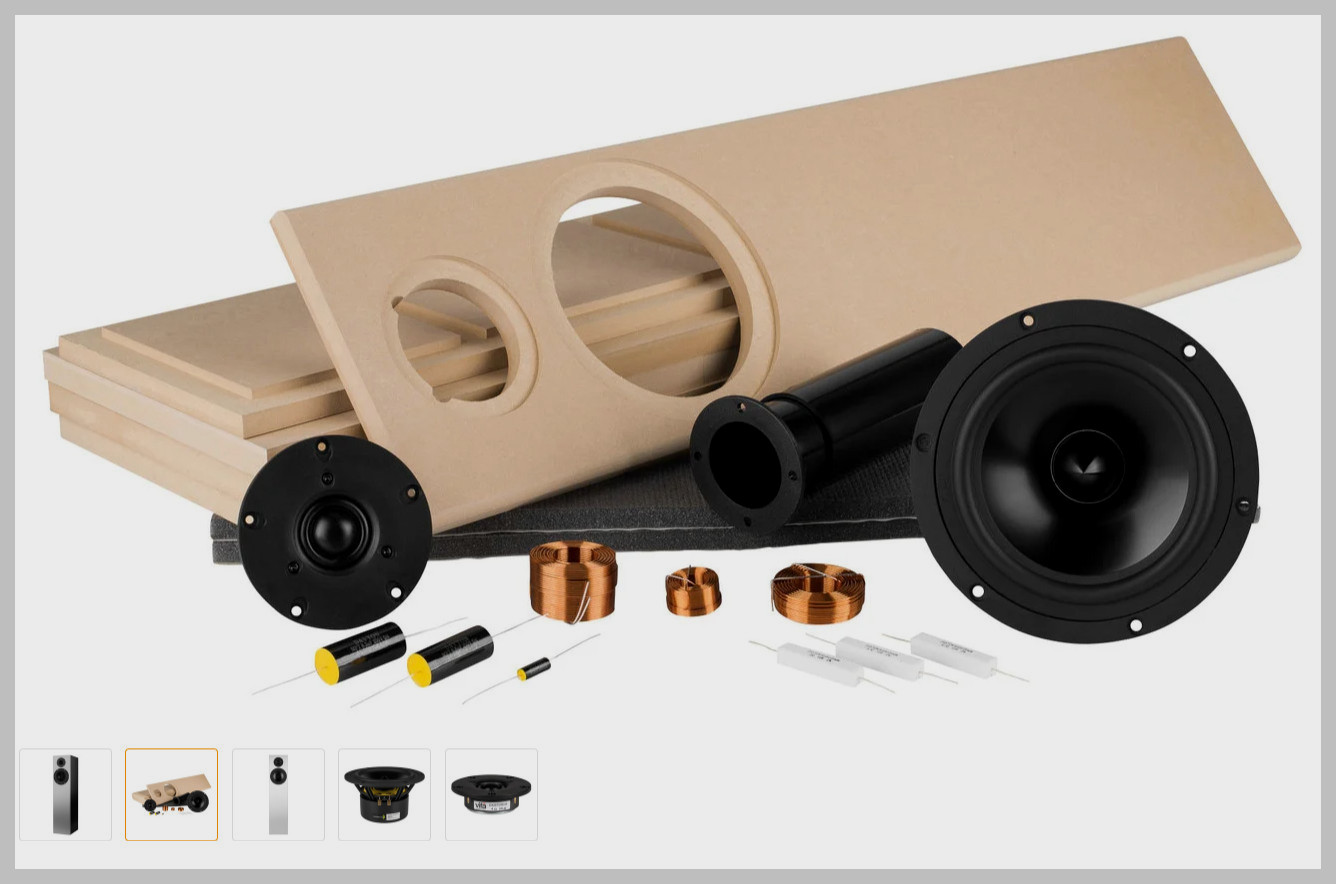
Figure 4.1: Typical, commercial speaker kit.
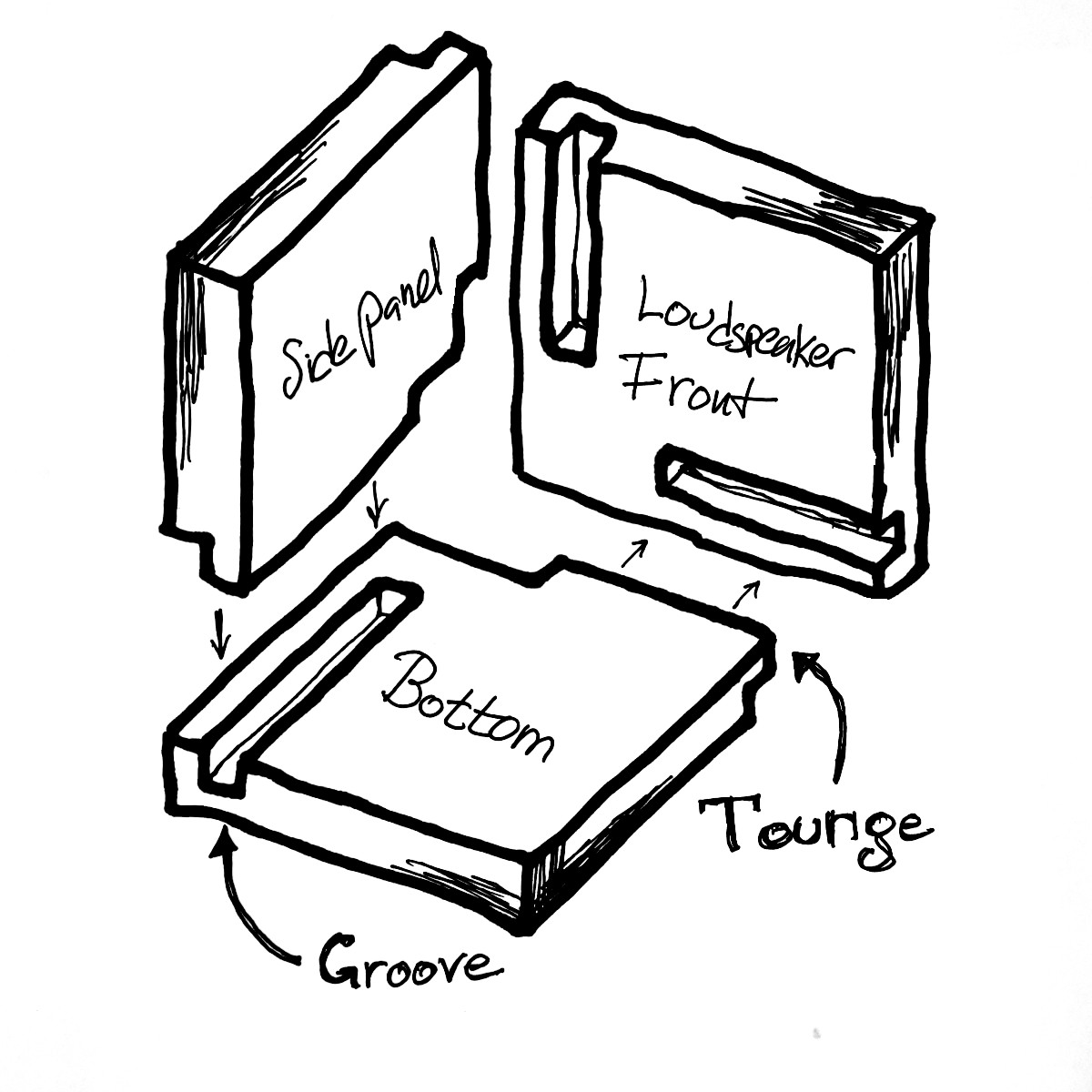
Figure 4.2: Tounges and grooves to aid the assembly of the cabinet.
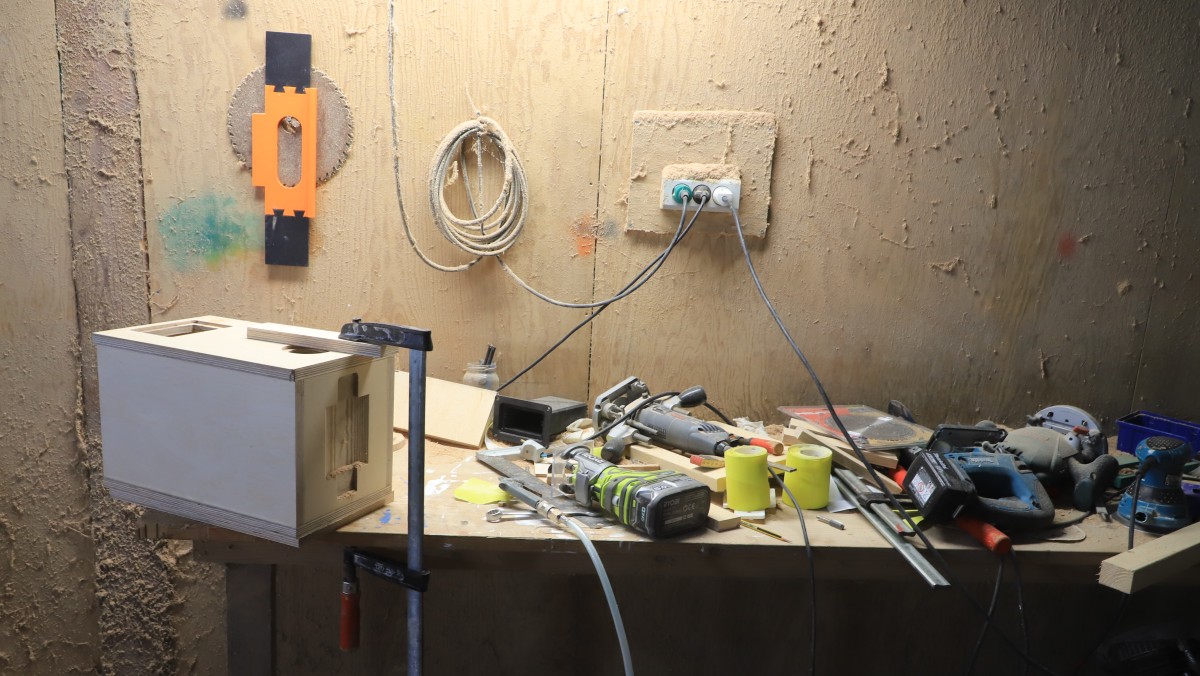
Figure 4.3: LIABLoud's workshop when it is most tidy!
5. Test Range.
The crossover is embedded in the DSP processor and we need to be able to measure the frequency response of the speakers. We have built our own outdoor measurement range as shown in Figure 5.1. The measurement microphone is seen on the left in both images. It is important that the speaker is placed high above the ground level, otherwise the measurements will be disturbed by reflections from it.
Figure 5.2 shows the measurement setup with a Clio Pocket measurement sound card, a PC with Windows, batteries and a LIABLoud amplifier. The pink bag with a flat cable is the programming device used when you want to program and change the DSP program with Sigma Studio. The whole thing is controlled with Team Viewer so we can sit indoor when performing measurements.
Figure 5.3 shows an actual measurement on the Bookshelf speaker after adjusting the crossover filter in the DSP.
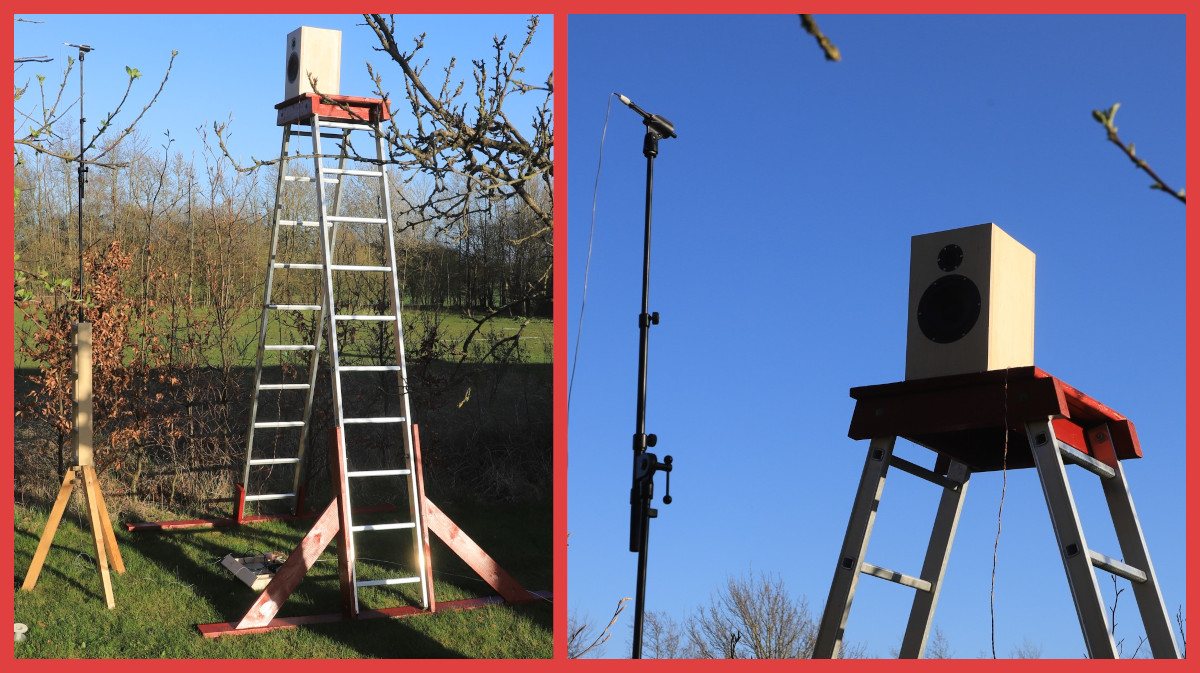
Figure 5.1: LIABLoud speaker test range - in the garden!
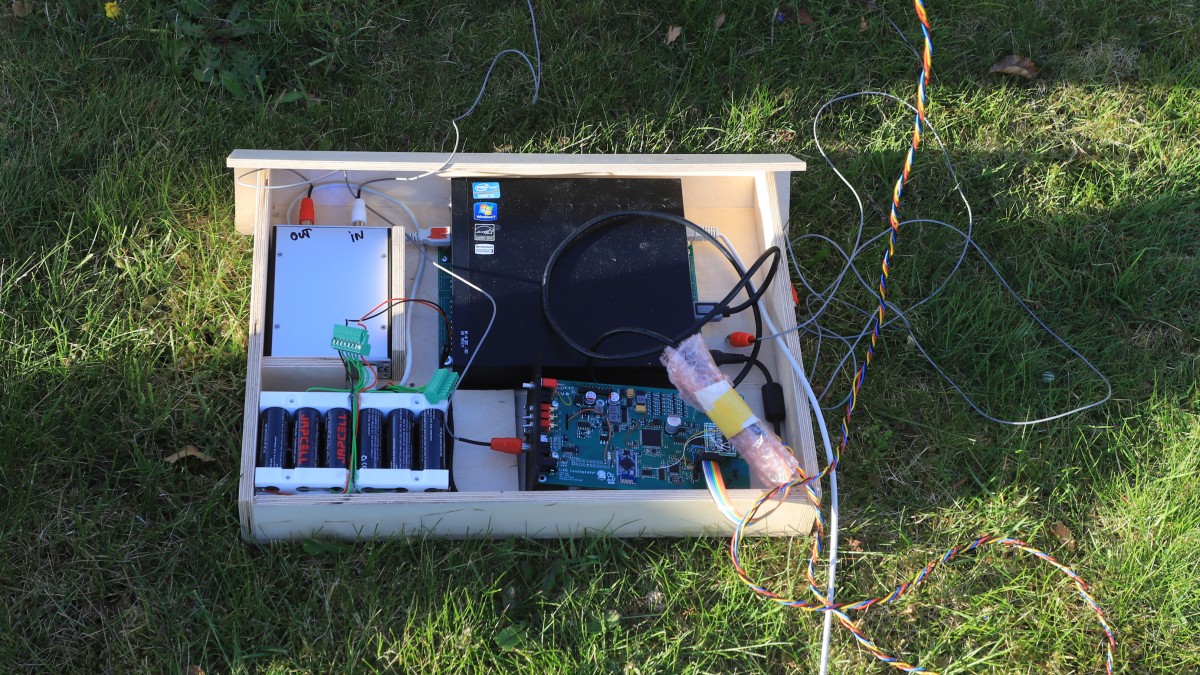
Figure 5.2: LIABLoud measurement system (the "Measurement House") with a Clio Pocket sound card.
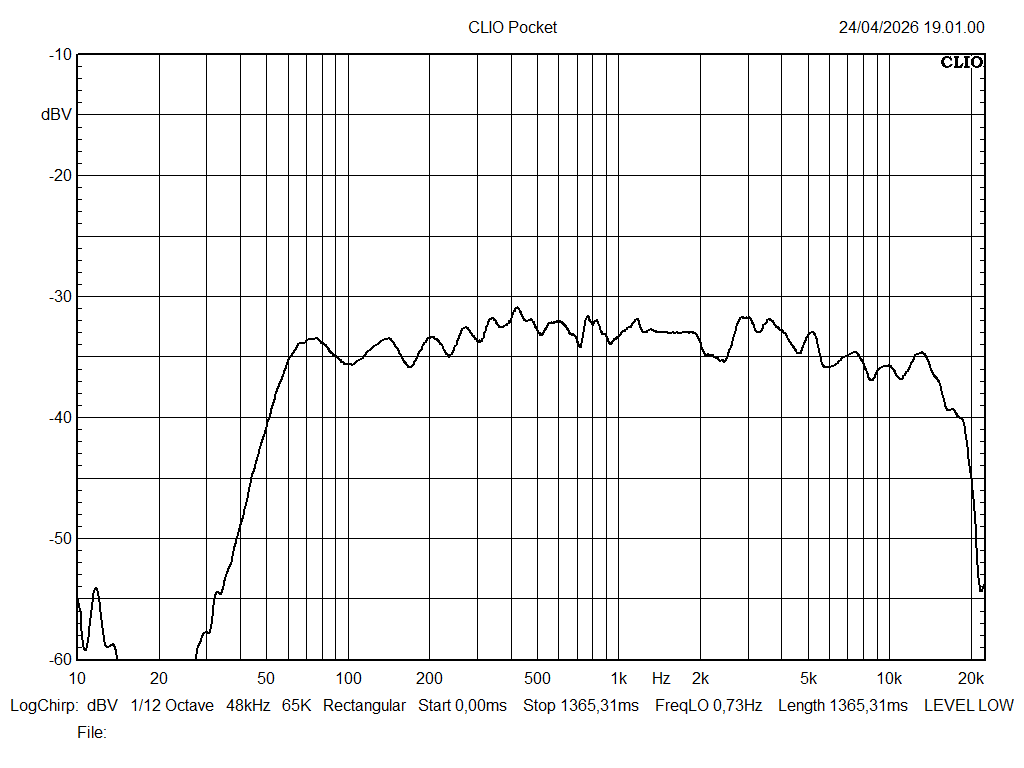
Figure 5.3: Actual measurement on the LIABLoud bookshelf speaker.
6. Moving Forward
If you've made it all the way down here, you might have a few questions, such as:
Great project, great speakers! I would like to buy a Bookshelf set, how much does it cost and how long is the delivery time?
Cool project, cool speakers! I would like to buy a Tower DIY kit, how much does it cost and how long is the delivery time?
Great project, cool amplifier! I would like to buy your completely wireless amplifier, how much does it cost and how long is the delivery time?
To all three questions, we as of writing (may 2026) reply, that the project has unfortunately not yet reached a state where we can start producing and selling finished speakers, DIY kits or amplifiers.
To achieve this, there is a lot of tasks to be done. So far, all work has been done as hourly work that has been noted but not invoiced, neither to LIAB ApS nor to others. We cannot continue like this, as parts of the upcoming work cannot be carried out by employees of LIAB:
- For the amplifier: in order to be able to put a CE mark on it, it must be tested and certified. This costs a whopping DKK 150,000 = $20.000. However, LIAB will gladly take care of the production of electronics after that.
- For the cabinets: Whether it is finished speakers or DIY kits, we need to find a company that can cut the plywood to size and possibly assemble the pieces.
- Design of plastic boxes, either for the amplifier alone (our cigar box cannot be mass-produced) or for the insert drawer. We can come a long way with 3D prints as we do now, however, for upscaling we need injection moulding.
- Driver: We have so far chosen drivers based only on performance and not by price. We need to get the price down, either by choosing other driver units or getting good deals with suppliers.
Only time will tell if LIABLoud will fly so high that we can start production and sales. However, we believe that the products have their justification and can be sold... But a lot depends on the price we can offer the products at.
If you, dear reader, have any good ideas for how we can move forward, send us an email or give us a call. If you have money you like to invest in the project, we love to hear about that too! :-)
Best regards from LIABLoud
Mikael Dich, Project Manager
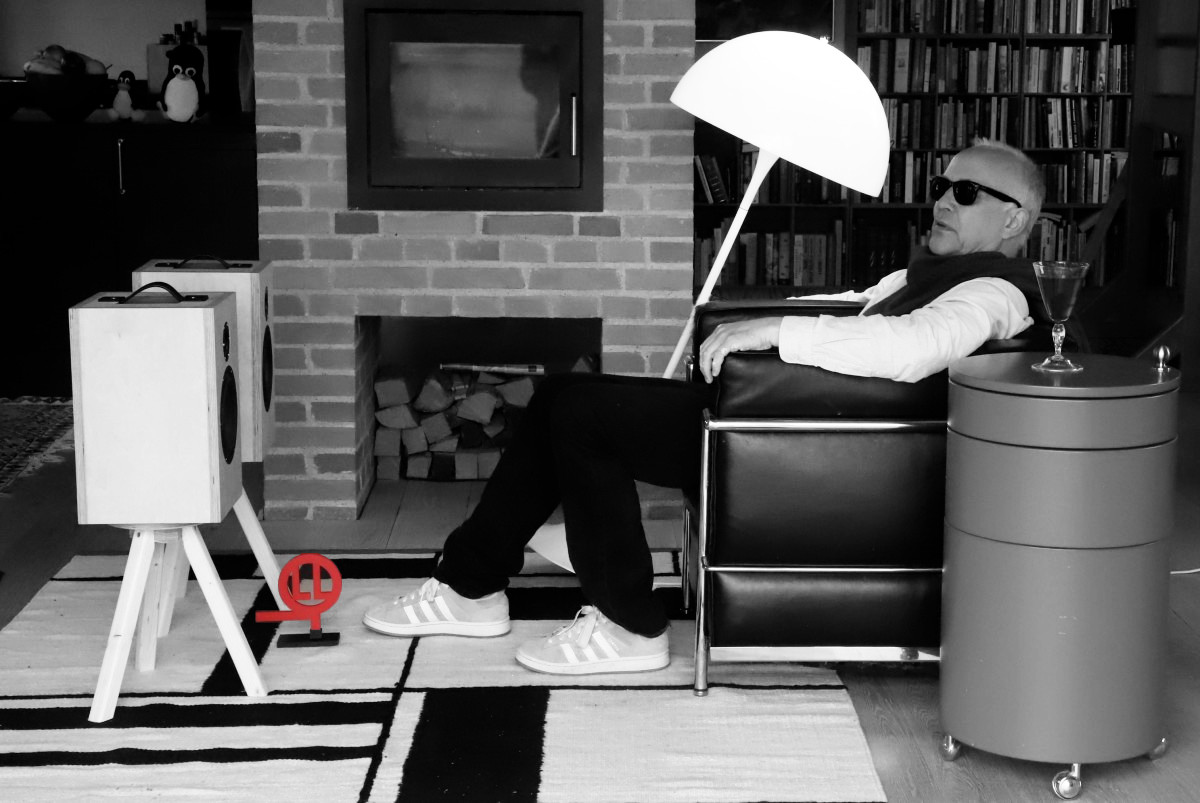
Figure 6.1: Great listening experience with the LIABLoud Bookshelf speakers! (search for "maxell blow away")